Hollywood
Christopher Nolan Biography, Age, Net Worth, Height, Movies & Updates
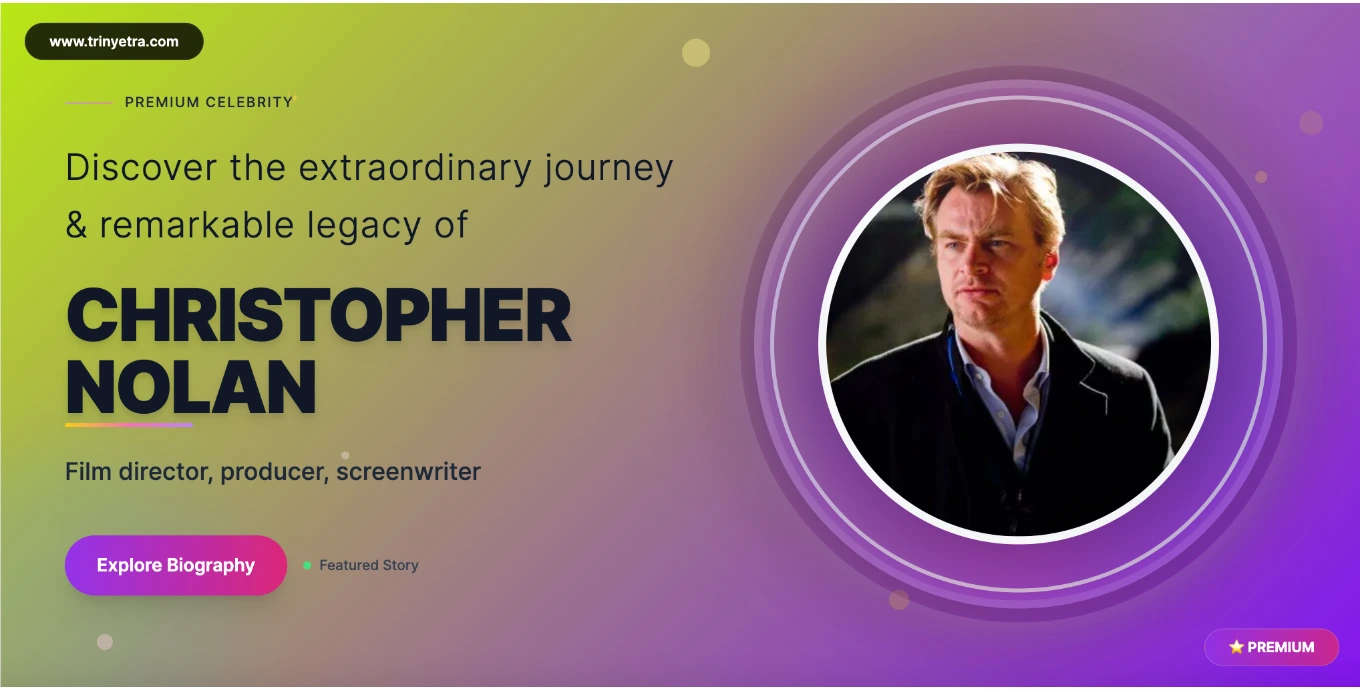
Sir Christopher Edward Nolan CBE is one of the most influential filmmakers of the 21st century, celebrated for revolutionizing mainstream cinema through intellectually ambitious narratives, practical effects mastery, and large-format filmmaking. Born July 30, 1970, in Westminster, London, this 55-year-old British-American director has built a career-defining contemporary blockbuster cinema.
From micro-budget neo-noir debut Following to Oscar-winning masterpiece Oppenheimer, Nolan has maintained creative control while commanding some of Hollywood's largest budgets. His filmography—spanning The Dark Knight trilogy, Inception, Interstellar, Dunkirk, and Tenet—has grossed over $6.6 billion worldwide and consistently ranked among critics' best-of-decade lists.
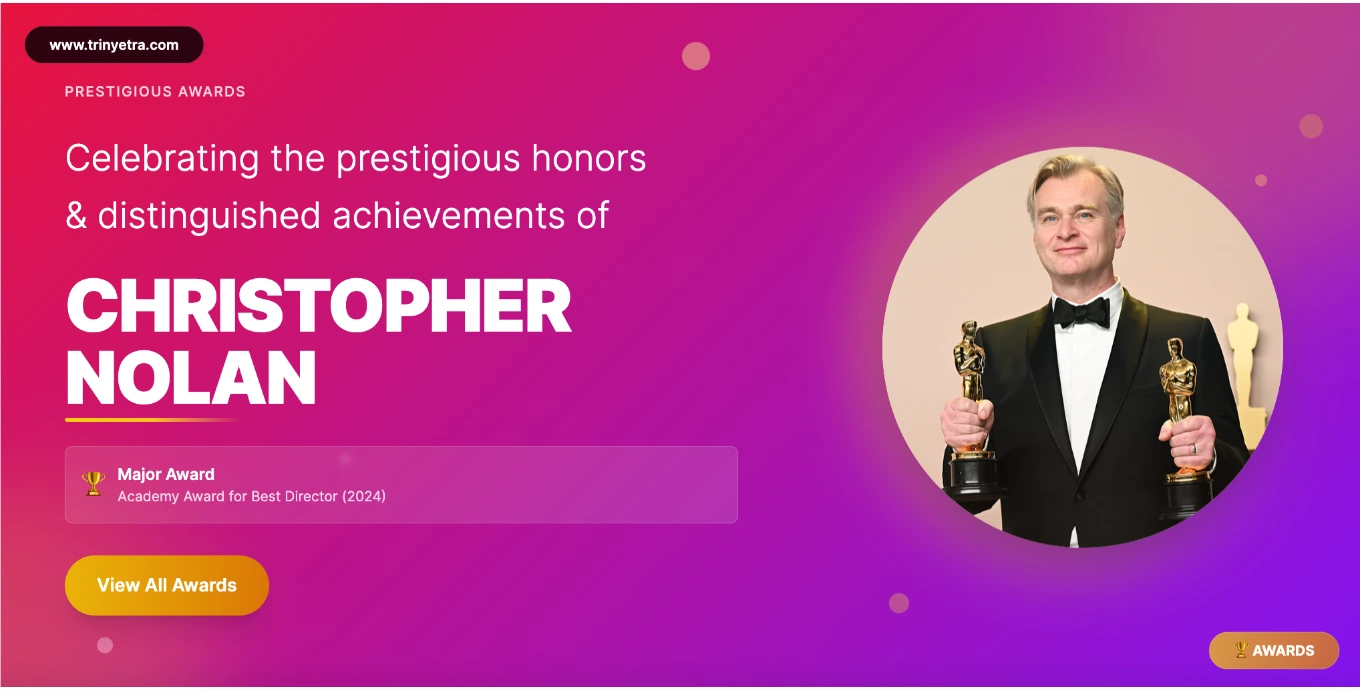
In 2024, Nolan achieved his greatest recognition, winning the Academy Award for Best Director and Best Picture for Oppenheimer, a biographical epic about J. Robert Oppenheimer and the Manhattan Project. He was knighted in 2024 for his services to film, cementing his legacy as a visionary architect of modern cinema.
| Real Name | Christopher Edward Nolan |
|---|---|
| Nick Name | Chris Nolan |
| Profession | Film Director, Producer, Screenwriter |
| Date of Birth | July 30, 1970 |
| Age | 55 years (as of 2025) |
| Zodiac Sign | Leo |
| Birth Place | Westminster, London, England |
| Height | 5'11" / 180 cm |
| Eye Color | Blue |
| Hair Color | Light brown |
| Marital Status | Married to Emma Thomas (1997) |
| Children | 4 |
| Nationality | British and American (dual citizenship) |
| Religion | Raised Catholic |
| Current Residence | Los Angeles, California, United States |
| Knighthood | Knight Bachelor (2024) |
Table of Contents
Biography & Career Overview
Christopher Nolan is a visionary filmmaker who transformed contemporary cinema by proving that intellectually complex, narratively innovative films could achieve blockbuster success. His philosophy emphasizes practical filmmaking, large-format cinematography, and stories that explore time, memory, identity, and human nature against epic canvases.

|
Nolan emerged from independent filmmaking with Following (1998), a black-and-white neo-noir shot on a micro-budget with friends. His breakthrough Memento (2000) introduced audiences to his signature reverse-chronology narrative, earning critical acclaim and establishing his reputation for structural innovation. This led to mainstream directing work on Insomnia (2002), followed by his reinvention of the superhero genre with Batman Begins (2005).
Nolan's career trajectory ascended dramatically with The Dark Knight trilogy (2005–2012), which redefined blockbuster cinema by proving superhero films could explore philosophical themes while delivering spectacle. The trilogy's success granted him unprecedented creative freedom and studio trust. Subsequently, he pursued increasingly ambitious projects: Inception (2010) blended science fiction with heist thriller aesthetics; Interstellar (2014) married epic space exploration with emotional family drama; Dunkirk (2017) revolutionized war cinema through sensory immersion.
With Oppenheimer (2023), Nolan delivered his most mature work—a biographical epic exploring the Manhattan Project's moral complexities. The film earned universal critical acclaim, proving his mastery extended beyond spectacle to intimate human drama. The 2024 Oscar wins for Best Director and Best Picture represent the industry's recognition of his transformative impact on cinema.
Early Life & Education
Childhood & Filmmaking Beginnings
Christopher Edward Nolan was born on July 30, 1970, in Westminster, London, England. His father, Brendan James Nolan, is a flight attendant, advertising executive, and author; his mother, Christina Jensen (now Christina Nolan), is an American former actress and flight attendant. Nolan spent his childhood split between London and the United States, giving him a dual British-American perspective reflected in his work.
At age seven, young Christopher received his father's Super 8 camera and began making films. His early shorts demonstrated technical ambition and creative curiosity, experimenting with stop-motion, animation, and live-action. Childhood influences included Stanley Kubrick's 2001: A Space Odyssey and George Lucas's Star Wars, films that demonstrated how cinema could explore grand philosophical and technical ambitions simultaneously.
Nolan's brothers include Jonathan Nolan, who would become a screenwriter and producer, and Matthew Nolan. Jonathan became Christopher's frequent collaborator, co-writing films and developing shared creative sensibilities rooted in childhood filmmaking experiments.
Educational Path
Christopher Nolan attended Haileybury and Imperial Service College and Barrow Hills School before studying English Literature at University College London (UCL), graduating in 1993. Notably, Nolan rejected formal film school, believing that studying literature would provide a broader intellectual foundation than technical film training.
At UCL, Nolan discovered the university's film society and utilized its resources extensively, producing shorts while studying literature. This period proved formative—he met Emma Thomas, who would become his wife and longtime producing partner. He also developed technical skills in editing and cinematography through hands-on experimentation, establishing his philosophy of learning filmmaking through practice rather than classroom instruction.
Personal Life & Family
Marriage & Family
Christopher Nolan married Emma Thomas in 1997, having met her at University College London. Emma is an accomplished film producer who has served as producer or executive producer on nearly all of Nolan's major films. Together, they founded Syncopy Inc., their production company, which has developed into one of Hollywood's most prestigious independent production entities.
Nolan and Thomas have four children together. The filmmaker carefully maintains family privacy despite his public prominence, rarely discussing children in interviews. He has spoken about how fatherhood influences his filmmaking, particularly regarding emotional depth and moral questioning in narratives. His commitment to family time coexists with intense professional demands.
Lifestyle & Working Philosophy
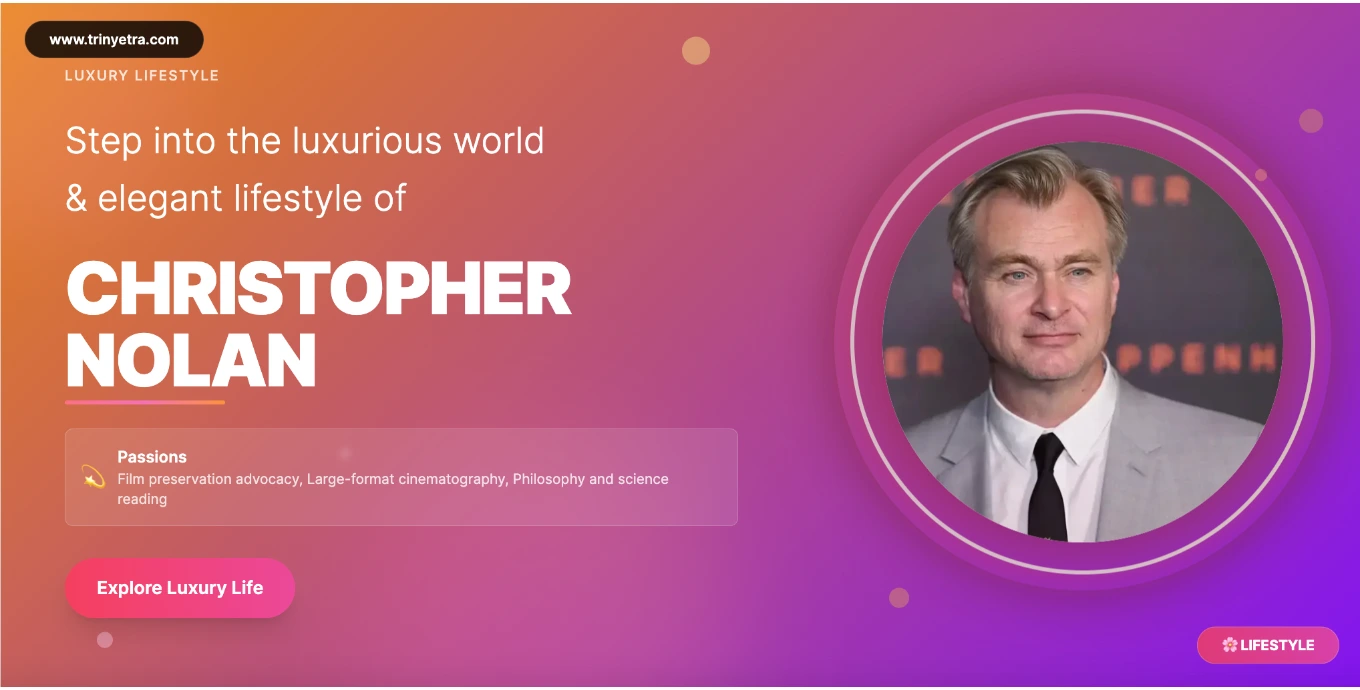
Christopher Nolan is known for disciplined, meticulous working methods on set. He maintains a classic personal style, frequently photographed in tailored dark suits with scarves—a signature look combining practicality with understated elegance. On set, he prioritizes comfort and functionality, allowing full focus on creative direction.
Nolan's hobbies and interests center on filmmaking philosophy. He is a vocal advocate for analog film preservation, regularly defending 35mm and IMAX shooting against digital alternatives. He reads extensively across physics, philosophy, history, and science to inform his storytelling. His creative partnership with brother Jonathan remains central to his work process.
Career Journey & Breakthrough
Independent Beginnings (1989–2000)
Christopher Nolan began his professional filmmaking career with shorts made during his university years. Tarantella (1989), co-directed, and Larceny (1996) and Doodlebug (1997)—directed, written, and edited by Nolan—demonstrated technical sophistication and artistic ambition in miniature. These shorts circulated through film festivals, building a reputation among cinephiles and industry professionals.
His feature debut, Following (1998), was shot on 16mm black-and-white film on a micro-budget with friends and nonprofessional actors. The neo-noir thriller follows a man who follows strangers, exploring themes of obsession and identity through a fragmented, chronologically disjointed narrative. The film's technical achievement and narrative innovation led to international festival recognition and caught studio attention.
| Early Career Milestones | |
|---|---|
| First Short | Tarantella (1989) – Co-director |
| Feature Debut | Following (1998) – Director, Writer, Cinematographer |
| Breakthrough Film | Memento (2000) – Reverse-chronology thriller |
| First Major Studio Film | Insomnia (2002) – $46 million budget |
Breakthrough & Studio Success (2000–2005)
Memento (2000) represented Nolan's breakthrough. Co-written with Jonathan and shot in color, the film told the story of a man with short-term memory loss seeking revenge through a fragmented, reverse-chronological narrative. The film was nominated for two Academy Awards and earned critical acclaim for its structural innovation and emotional depth beneath technical complexity.
Insomnia (2002) marked Nolan's first major studio film, a $46 million thriller starring Al Pacino and Robin Williams. Though a remake of a Norwegian film, Nolan brought a distinctive visual style and thematic depth, proving he could work within studio constraints while maintaining artistic vision.
Batman Begins (2005) was the turning point. Greenlit with a $150 million budget, the film reinvented the superhero genre by grounding Batman mythology in psychological realism and moral ambiguity. Nolan's approach—prioritizing character development and practical effects, treating the material seriously—revolutionized blockbuster filmmaking. The film earned $375 million globally and launched one of cinema's most successful franchises.
Creative Dominance (2006–2010)
The Prestige (2006) demonstrated Nolan's range outside superhero material. This period thriller about rival magicians explored obsession and identity through intricate narrative structure, again showcasing his sophistication in blending commercial appeal with intellectual complexity.
The Dark Knight (2008) became a cultural phenomenon and artistic achievement. The film earned $1 billion globally—a massive figure for 2008—while earning universal critical acclaim. Heath Ledger's posthumous Oscar win for the Joker cemented the film's cultural significance. Nolan proved superhero films could explore philosophical themes about chaos, order, and morality while delivering visceral action.
Inception (2010) demonstrated Nolan's mastery of original blockbuster filmmaking. The science-fiction heist film about dream infiltration pushed practical effects and IMAX cinematography boundaries. Grossing $839 million globally, Inception proved audiences would embrace complex, structurally innovative narratives in blockbuster form.
|
Complete Filmography & Major Works
Feature Films (Chronological)
| Film Title | Year | Role | Genre |
|---|---|---|---|
| Following | 1998 | Director, Writer, Cinematographer | Neo-noir thriller |
| Memento | 2000 | Director, Screenwriter (with Jonathan Nolan) | Psychological thriller |
| Insomnia | 2002 | Director | Crime thriller |
| Batman Begins | 2005 | Director, Co-writer | Superhero origin |
| The Prestige | 2006 | Director, Co-writer, Producer | Period mystery thriller |
| The Dark Knight | 2008 | Director, Co-writer, Producer | Superhero crime epic |
| Inception | 2010 | Director, Writer, Producer | Science-fiction heist |
| The Dark Knight Rises | 2012 | Director, Co-writer, Producer | Superhero conclusion |
| Interstellar | 2014 | Director, Co-writer, Producer | Science-fiction epic |
| Dunkirk | 2017 | Director, Writer, Producer | War epic |
| Tenet | 2020 | Director, Writer, Producer | Science-fiction action |
| Oppenheimer | 2023 | Director, Writer, Producer | Biographical drama |
Notable Short Films
Tarantella (1989) – Early experimental co-directed short. Larceny (1996) – Black-and-white heist short directed, written, and edited by Nolan. Doodlebug (1997) – Psychological short about obsession and perspective. Quay (2015) – Documentary short about acclaimed stop-motion filmmakers Stephen and Timothy Quay.
Awards & Recognition
Christopher Nolan has received unprecedented critical and industry recognition, achieving the highest honors in international filmmaking.
| Award | Category | Year | Status |
|---|---|---|---|
| Academy Award | Best Director | 2024 | Won (Oppenheimer) |
| Academy Award | Best Picture | 2024 | Won (Oppenheimer, as producer) |
| BAFTA Award | Best Director | 2024 | Won (Oppenheimer) |
| Golden Globe | Best Director – Motion Picture | 2024 | Won (Oppenheimer) |
| Knighthood | Knight Bachelor | 2024 | Honored |
| CBE Honor | Commander of the Order of the British Empire | 2019 | Honored |
Career Recognition Highlights
Oppenheimer (2023) represents Nolan's greatest industry recognition. The film earned nominations across major award ceremonies, with Nolan securing Best Director wins at the Academy Awards, BAFTA, and Golden Globes. The film's Best Picture win confirmed Nolan's achievement of creating a mature, intellectually sophisticated film that achieved blockbuster success.
In 2024, Nolan received a knighthood for his services to film, becoming Sir Christopher Nolan. Previously, he was appointed CBE (Commander of the Order of the British Empire) in 2019. These honors reflect industry and governmental recognition of his transformative impact on cinema globally.
Throughout his career, Nolan's films have been nominated for numerous Academy Awards. Inception earned eight Oscar nominations, Interstellar five nominations, and Dunkirk eight nominations. This consistent recognition reflects the industry's respect for his artistic achievement and commercial success.
Physical Appearance & Style
| Height | 5'11" / 180 cm |
|---|---|
| Eye Color | Blue |
| Hair Color | Light brown |
| Build | Athletic, tall frame |
| Distinctive Features | Thoughtful demeanor, expressive blue eyes |
| Style Signature | Tailored dark suits with scarves |
Fashion & Professional Aesthetic
Christopher Nolan maintains a classic, minimalist personal style reflecting his creative philosophy. He is frequently photographed in tailored dark suits, often paired with scarves—a signature combination that projects intellectual gravity without ostentation. His on-set attire prioritizes functionality, allowing movement and comfort during long directing days.
Nolan's appearance is understated, reflecting his preference for creative work over personal celebrity. He avoids excessive branding or designer consciousness, instead investing in quality tailoring and classic menswear. This aesthetic approach aligns with his filmmaking philosophy: substance prioritized over surface presentation.
Latest Projects & 2025 News
Post-Oppenheimer Development
Following Oppenheimer's 2024 award season success, Nolan has entered a new creative phase. While no official announcement regarding his next directorial project has been confirmed as of late 2025, industry sources suggest the filmmaker is evaluating multiple scripts and considering various filmmaking opportunities outside traditional studio systems.
Nolan's production company, Syncopy Inc., continues developing projects with Emma Thomas. The company maintains a robust development slate, though specifics remain confidential until official announcements.
| Project Status | Details |
|---|---|
| Next Directorial Project | In development; script phase (TBA) |
| Syncopy Inc. Development | Multiple projects in development with Emma Thomas |
| Industry Involvement | Consulting, advocacy for film preservation |
| Public Appearances | Film festival participation, retrospective events |
Trending 2024–2025 Updates & News
Christopher Nolan in the News
- March 2024: Oppenheimer wins Best Picture, Best Director at Academy Awards. Nolan becomes the first writer-director to win Best Picture since Billy Wilder in 1960.
- January 2024: Oppenheimer wins Best Director at Golden Globes, and Nolan wins Best Director and Best Picture at BAFTAs, sweeping major ceremonies.
- June 2024: Nolan receives knighthood in King's Birthday Honours for services to film. Becomes Sir Christopher Nolan, CBE.
- October 2024: Retrospective screenings of Nolan's complete filmography at major film festivals celebrate his career and influence.
- December 2024: Industry speculation about Nolan's next project intensifies; filmmaker remains focused on script development.
- March 2025: Nolan announces commitment to continuing large-format, practical filmmaking advocacy amid digital cinema industry debates.
- September 2025: Syncopy Inc. expands development slate; multiple projects attributed to Nolan's production company announced by major studios.
Interesting Facts & Trivia About Christopher Nolan
Here are lesser-known facts showcasing Christopher Nolan's filmmaking philosophy and unique career journey:
- Film Preservation Advocate: Nolan is an outspoken defender of analog film and large-format cinematography, regularly arguing against digital-only cinema. He has personally funded film preservation projects.
- IMAX Pioneer: Nolan pioneered mainstream use of IMAX in narrative features. Portions of Inception, The Dark Knight Rises, Interstellar, Dunkirk, and Tenet were shot in IMAX, revolutionizing blockbuster cinematography.
- Practical Effects Master: He eschews green screen whenever possible, using practical effects, miniatures, and camera techniques to achieve visual effects. The zero-gravity hallway fight in Inception used a rotating set.
- No Formal Film School: Nolan deliberately avoided film school, believing English literature studies provided a better intellectual foundation than technical training.
- Brother as Collaborator: Jonathan Nolan co-wrote several of Christopher's films and later became a successful director and screenwriter himself, maintaining the collaborative spirit of their childhood filmmaking.
- Clockwork Narrative Structures: Nolan's films frequently employ complex, non-linear narrative structures—reverse chronology (Memento), parallel timelines (Dunkirk), time inversion (Tenet)—exploring how structure conveys meaning.
- Philosophical Depth: His films consistently explore philosophical themes: identity and memory (Memento), morality and chaos (The Dark Knight), time and relativity (Interstellar), and moral responsibility (Oppenheimer).
- First Writer-Director Best Picture Since Billy Wilder: With Oppenheimer's Best Picture win, Nolan became the first writer-director to win Best Picture since Billy Wilder won for The Apartment in 1960—a 64-year gap.
- Global Box Office Dominance: Nolan's films have grossed over $6.6 billion worldwide, making him one of the most commercially successful directors in cinema history.
- Blockbuster with Intellectual Substance: Nolan uniquely bridges art cinema and blockbuster filmmaking—his films achieve critical acclaim while grossing $700 million+ globally, proving audiences embrace complexity.
- Production Company Success: Syncopy Inc., founded with Emma Thomas, has produced nearly all his films and develops projects independently, becoming a prestigious production entity.
|
Frequently Asked Questions About Christopher Nolan
Personal Information & Background
What is Christopher Nolan's full name?
Christopher Edward Nolan is his full name. His title is now Sir Christopher Edward Nolan, CBE following his knighthood in 2024.
How old is Christopher Nolan?
Christopher Nolan was born on July 30, 1970, making him 55 years old as of 2025.
Where was Christopher Nolan born?
Christopher Nolan was born in Westminster, London, England and spent his childhood between England and the United States, holding dual British-American citizenship.
What is Christopher Nolan's height?
Christopher Nolan is 5'11" (180 cm) tall with blue eyes and light brown hair.
Is Christopher Nolan married?
Yes, Christopher Nolan married Emma Thomas in 1997. Emma is an accomplished film producer and co-founder of Syncopy Inc., the production company behind most of Nolan's films. Together they have four children.
Who are Christopher Nolan's parents?
Christopher Nolan's father is Brendan James Nolan, a flight attendant and advertising executive. His mother is Christina Jensen (now Christina Nolan), a former actress and flight attendant. His brother Jonathan Nolan is a successful screenwriter and director.
What is Christopher Nolan's religion?
Christopher Nolan was raised Catholic. Though he has discussed moral and existential themes extensively in his work, he does not publicly foreground religious affiliation in his professional life.
What nationality is Christopher Nolan?
Christopher Nolan holds dual British and American citizenship, reflecting his Anglo-American upbringing and career spanning both countries.
Career & Professional Life
What is Christopher Nolan best known for?
Christopher Nolan is best known for directing The Dark Knight trilogy, Inception, Interstellar, Dunkirk, Tenet, and Oppenheimer. He's renowned for complex narrative structures, practical effects mastery, and large-format cinematography.
How did Christopher Nolan start his filmmaking career?
Christopher Nolan began making films at age seven using his father's Super 8 camera. He created shorts throughout university, graduating from UCL with an English Literature degree. His micro-budget feature debut Following (1998) led to breakthrough Memento (2000).
What is Christopher Nolan's most acclaimed film?
Oppenheimer (2023) is his most critically acclaimed work, winning Best Picture and Best Director at the Academy Awards, BAFTA, and Golden Globes. The Dark Knight (2008) is also frequently ranked among his greatest achievements.
How many films has Christopher Nolan directed?
Christopher Nolan has directed 12 feature films (plus several shorts): Following, Memento, Insomnia, Batman Begins, The Prestige, The Dark Knight, Inception, The Dark Knight Rises, Interstellar, Dunkirk, Tenet, and Oppenheimer.
What is The Dark Knight trilogy?
The Dark Knight trilogy consists of Batman Begins (2005), The Dark Knight (2008), and The Dark Knight Rises (2012). The trilogy revolutionized superhero filmmaking by grounding Batman mythology in psychological realism and exploring moral complexity.
What makes Inception unique?
Inception (2010) is a science-fiction heist film about dream infiltration and shared consciousness. It pioneered IMAX narrative filmmaking, employed groundbreaking practical effects, and achieved complex storytelling within a blockbuster format, grossing $839 million globally.
Tell me about Interstellar.
Interstellar (2014) is an epic science-fiction film combining space exploration with family drama. Themes include relativity, time, love, and human survival. The film earned five Oscar nominations and is praised for scientific rigor and emotional depth.
What is Dunkirk about?
Dunkirk (2017) is a war epic following the 1940 evacuation of Allied troops from Dunkirk, France. Nolan employs parallel timelines and sensory immersion to create unprecedented war cinema. The film earned eight Oscar nominations.
What is Tenet?
Tenet (2020) is an action-sci-fi thriller exploring time inversion and entropy. The protagonist must prevent World War III by manipulating inverted time. The film showcases Nolan's complex narrative structures and practical action filmmaking.
What is Oppenheimer about?
Oppenheimer (2023) is a biographical drama about J. Robert Oppenheimer and the Manhattan Project. The film explores scientific achievement, moral responsibility, and the consequences of creating atomic weapons. It won Best Picture, Best Director, and multiple Oscars.
Why does Christopher Nolan prefer practical effects?
Nolan advocates for practical effects and large-format filming because they enhance realism, immersion, and audience engagement. He believes tangible filmmaking creates superior visual and emotional experiences compared to digital alternatives.
Why is Christopher Nolan known for IMAX cinematography?
Nolan pioneered mainstream use of IMAX in narrative features, believing large-format cinematography enhances immersion and visual spectacle. Portions of Inception, The Dark Knight Rises, Interstellar, Dunkirk, and Tenet were shot in IMAX
Awards & Recognition
Has Christopher Nolan won an Oscar?
Yes. In 2024, Christopher Nolan won the Academy Award for Best Director and Best Picture (as producer) for Oppenheimer. He also won BAFTA and Golden Globe awards for Best Director.
Is Christopher Nolan a knight?
Yes. Christopher Nolan was knighted in June 2024, becoming Sir Christopher Edward Nolan, CBE, in recognition of his services to film.
What major awards has Christopher Nolan won?
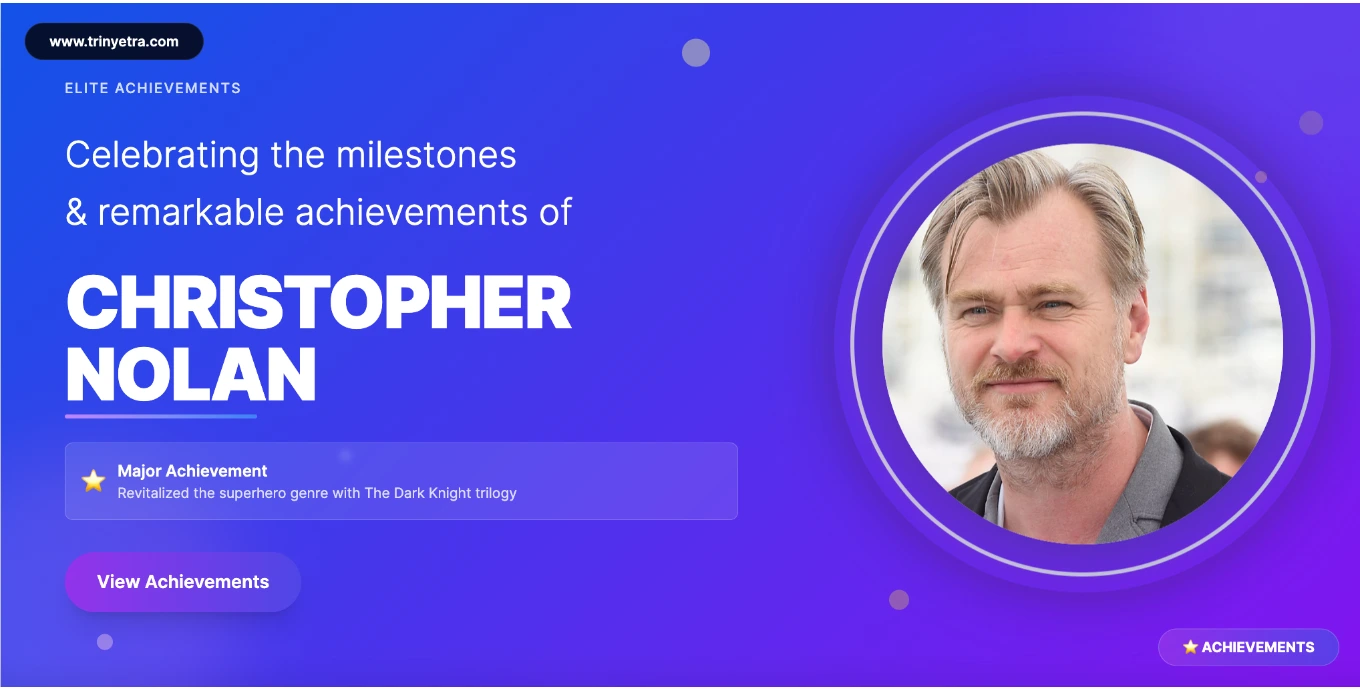
Christopher Nolan has won the Academy Award for Best Director and Best Picture (Oppenheimer, 2024), BAFTA Award for Best Director (2024), Golden Globe for Best Director (2024), and was appointed CBE in 2019 and knighted in 2024.
|
Filmmaking & Style
What is Christopher Nolan's filmmaking philosophy?
Christopher Nolan emphasizes practical filmmaking, large-format cinematography, and intellectually ambitious narratives. He prioritizes realism, practical effects, and film preservation over digital alternatives, believing this enhances audience experience.
Does Christopher Nolan use CGI in his films?
Christopher Nolan minimizes CGI usage, preferring practical effects, miniatures, and camera techniques. When digital effects are necessary, they supplement practical methods rather than replace them.
Why did Christopher Nolan reject film school?
Nolan believed studying English literature at university provided a broader intellectual foundation than formal film school. He learned filmmaking through hands-on practice using university film society resources.
How long are Christopher Nolan's films?
Nolan's films typically range from 120 to 180+ minutes. Oppenheimer is 180 minutes, Interstellar is 169 minutes, The Dark Knight Rises is 165 minutes. He believes longer runtimes allow complex storytelling.
Current Status & Future
What is Christopher Nolan working on next?
As of 2025, Christopher Nolan's next directorial project remains in development, with no official announcement. Industry sources suggest he is evaluating scripts and considering various filmmaking opportunities.
Is Christopher Nolan still directing films?
Yes, Christopher Nolan remains active in filmmaking. Following Oppenheimer's 2024 success and award recognition, he is developing future projects through Syncopy Inc. with Emma Thomas.
How much have Christopher Nolan's films grossed worldwide?
Christopher Nolan's complete filmography has grossed over $6.6 billion worldwide, making him one of the most commercially successful directors in cinema history.
What is Syncopy Inc.?
Syncopy Inc. is the production company founded by Christopher and Emma Nolan. It has produced nearly all of Nolan's feature films and continues developing projects independently with major studios.
Related Articles
Explore the journeys of remarkable individuals who continue to inspire across industries and cultures with their unique contributions.
- Denzel Dion Biography, Age, Net Worth, Height, YouTube & Updates
- Nick Kroll Biography, Age, Net Worth, Height, Movies & Updates
- Steven Yeun Biography, Age, Net Worth, Height, Movies & Latest Updates
- Jennifer Lawrence Biography, Age, Net Worth, Height, Movies & Latest Updates
- Randall Park Biography, Age, Net Worth, Height, Movies & Latest Updates
- Jason Kelce Biography, Age, Net Worth, Height, Career & Latest Updates
- Ryan Murphy Biography, Age, Net Worth, Shows, Movies & Latest Updates
- Patrick Mahomes Biography, Age, Net Worth, Height, Career & Latest Updates
- Michael Fassbender Biography, Age, Net Worth, Height, Movies & Latest Updates
- James McAvoy Biography, Age, Net Worth, Height, Movies & Latest Updates
- Kate Winslet Biography, Age, Net Worth, Height, Movies & Latest Updates
- Julia Roberts Biography, Age, Net Worth, Height, Movies & Latest Updates
- Emma Roberts Biography, Age, Net Worth, Height, Movies & Latest Updates
- Guillermo del Toro Biography, Age, Net Worth, Height, Movies & Latest Updates
- Gigi Hadid Biography, Age, Net Worth, Height, Boyfriend & 2025 Updates
- Jack Antonoff Biography, Age, Net Worth, Height, Career & Latest Updates
- Ed Sheeran Biography, Age, Net Worth, Height, Songs & Latest Updates
- Amanda Seyfried Biography, Age, Net Worth, Height, Movies & Latest Updates
- Russell Crowe Biography, Age, Net Worth, Height, Movies & 2025 Updates
|
Jean Smart Biography, Age, Net Worth, Height, Movies & L...

Selena Gomez Biography, Age, Net Worth, Height, Movies &...

Russell Crowe Biography, Age, Net Worth, Height, Movies ...

Katherine Langford Biography, Age, Net Worth, Height, Mo...

Kaley Cuoco Biography, Age, Net Worth, Height, Movies & ...

Amanda Seyfried Biography, Age, Net Worth, Height, Movie...

Jack Antonoff Biography, Age, Net Worth, Height, Career ...

Ed Sheeran Biography, Age, Net Worth, Height, Songs & La...

Gigi Hadid Biography, Age, Net Worth, Height, Boyfriend ...
Guillermo del Toro Biography, Age, Net Worth, Height, Mo...
Emma Roberts Biography, Age, Net Worth, Height, Movies &...
Julia Roberts Biography, Age, Net Worth, Height, Movies ...
Kate Winslet Biography, Age, Net Worth, Height, Movies &...
James McAvoy Biography, Age, Net Worth, Height, Movies &...
Michael Fassbender Biography, Age, Net Worth, Height, Mo...
Ryan Murphy Biography, Age, Net Worth, Shows, Movies & L...

Randall Park Biography, Age, Net Worth, Height, Movies &...

Jennifer Lawrence Biography, Age, Net Worth, Height, Mov...

Denzel Dion Biography, Age, Net Worth, Height, YouTube &...
Christopher Nolan Biography, Age, Net Worth, Height, Mov...

Emma Stone Biography, Age, Net Worth, Height, Movies & F...
Jenna Ortega Biography, Age, Net Worth, Height, Movies &...

Zendaya Biography, Age, Net Worth, Height, Movies & Fact...
Vin Diesel Biography, Age, Net Worth, Height, Movies & F...